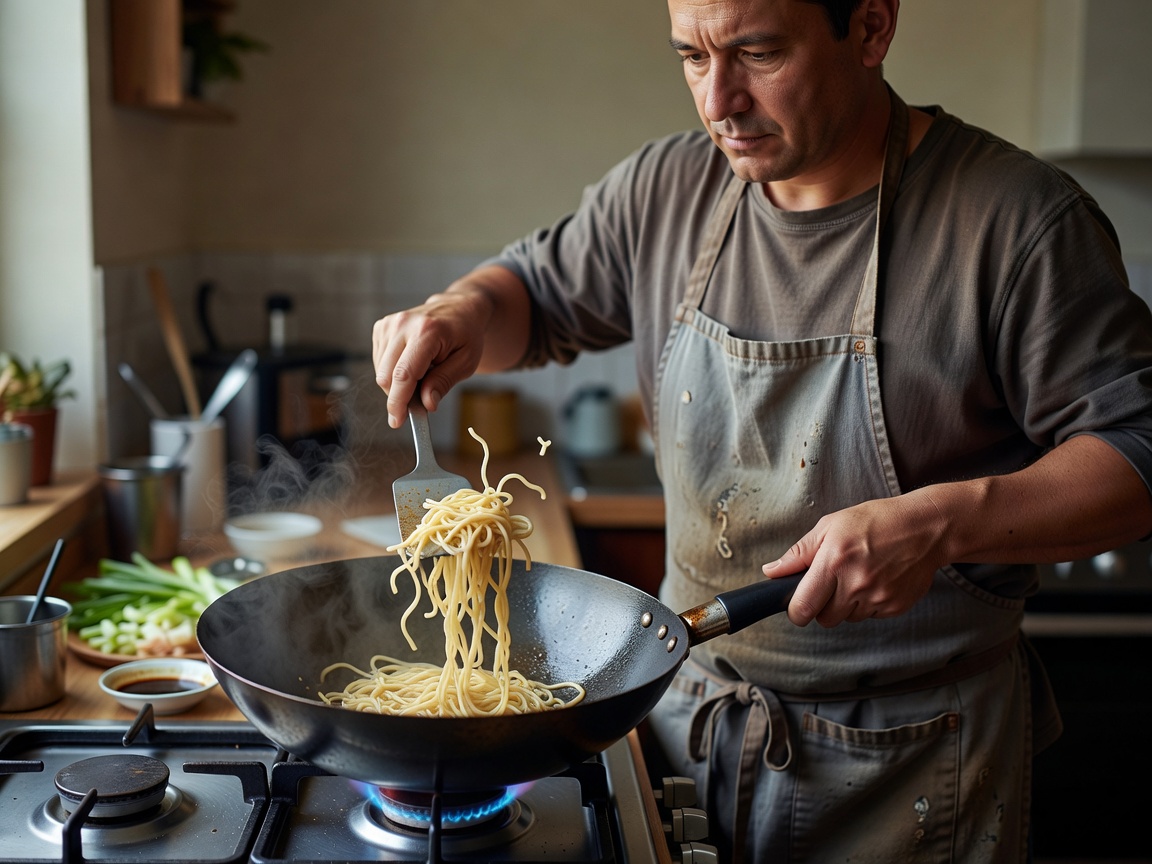
Match the pan to the kitchen
A flat-bottomed carbon-steel wok can work well on compatible domestic hobs, but a wide frying pan is a valid alternative. A round-bottomed wok needs appropriate support and a suitable heat source. Check the manufacturer's instructions, especially for induction, non-stick coatings and maximum temperatures. Do not preheat an empty non-stick pan over high heat.
Set up ventilation, move loose packaging away from the hob and keep handles positioned safely. Restaurant-style flames and dramatic tossing are not learning objectives here. If oil smokes heavily, reduce the heat or remove the pan from the burner safely. Never pour water onto burning oil; turn off the heat if safe and use an appropriate lid or fire blanket. Follow local fire-service advice if a fire cannot be controlled immediately.
Prepare before the first ingredient
Cut vegetables to sizes that cook at similar speeds, or separate them into groups. Carrot strips need more time than tender leaves. Rinse produce as appropriate and dry surface moisture well. Keep raw proteins, utensils and boards separate from cooked ingredients, and use a food thermometer and reliable safety guidance for their required internal temperatures.
Prepare noodles according to their type and packet instructions. Some need boiling, others soaking or simple loosening. Drain thoroughly. If the noodles are already cooked, avoid leaving them at room temperature for extended periods; cool and refrigerate promptly when preparing ahead. Do not assume rinsing is always necessary, but use it when the noodle type or recipe calls for it.
Build a sequence, not a pile
For your first exercise, use one portion of noodles and a modest amount of sliced vegetables. Measure the sauce into a small cup. Have a clean bowl ready to receive cooked components. This prevents the common mistake of keeping early ingredients in the pan until the final addition is ready.
Warm a suitable pan, add an appropriate cooking oil and begin with ingredients that benefit from direct contact. Allow brief contact before moving them, then stir or turn as needed. Remove components when they reach their intended texture. Add delicate aromatics later if they would burn during a long sear. Return the cooked ingredients only when the noodles are ready to combine.
Read the sound and the surface
A steady sizzle suggests active evaporation and hot contact, while a deep pool of released water indicates that moisture is accumulating faster than the pan can disperse it. Do not solve every puddle by raising the heat. Remove part of the batch, let excess liquid evaporate and finish in smaller portions. This protects vegetables from becoming soft while the pan recovers.
Add sauce in measured amounts and turn the noodles gently to distribute it. A sauce containing sugar can scorch quickly on bare hot metal. Unless a particular recipe specifies otherwise, avoid leaving a concentrated sweet sauce in one spot. The aim is a thin coating, not a burnt layer beneath an otherwise wet batch.
Practise a complete sequence
- Arrange drained noodles, dried vegetables, measured sauce and an empty holding bowl within reach.
- Cook firm vegetables first, then remove them while they still have the texture you want.
- Warm and loosen the noodles without crushing them. Add a little liquid only if necessary, not automatically.
- Return the vegetables, add sauce gradually and stop when everything is hot and evenly coated.
Troubleshoot without blaming the equipment
Broken noodles may be overcooked or handled too aggressively. Sticking can come from crowded ingredients, insufficiently prepared pan surfaces or starch-heavy wet noodles. Bitter patches may indicate scorched garlic or sauce. Change one variable in the next batch: halve the portion, improve draining or add aromatics later. A more powerful burner will not correct a sequence you have not yet organised.
Connect heat to regional practice
Japanese yakisoba offers a useful study in vegetable sequencing and sauce distribution. Thai pad see ew highlights the handling of broad rice noodles, which can tear when cold and tightly clumped. Cantonese chow mein includes multiple noodle textures and finishing methods rather than one universal technique. Follow a reliable recipe for the style you choose and notice which parts of this lesson transfer, and which require a different approach.
Finish with a useful comparison
Cook two small batches with the same ingredients. In the second, change only the amount in the pan. Compare moisture, texture and ease of turning. Once heat management is steady, refine the sauce rather than adding more of it.
Continue to sauce balance