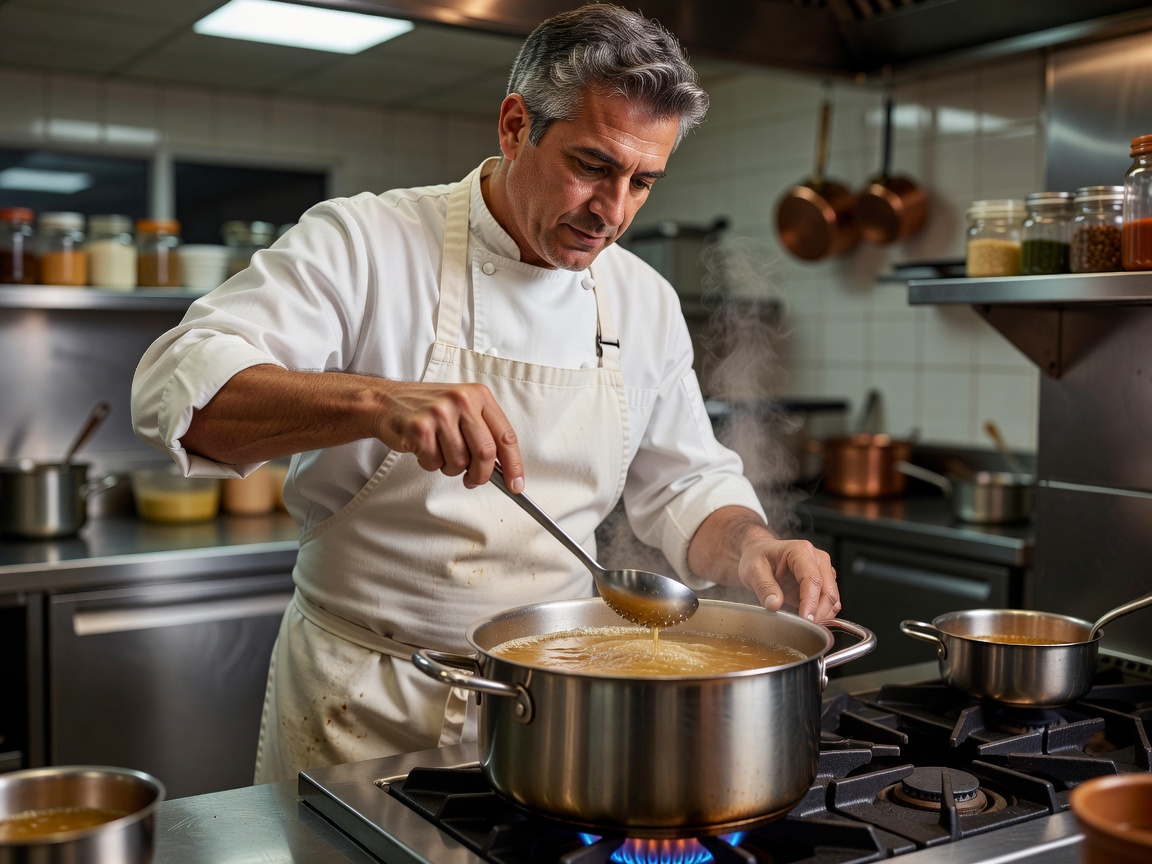
Choose a clear destination
Decide whether you want a light vegetable broth, a clear chicken broth or a deliberately rich, cloudy stock. These are different projects. A turbulent boil can help emulsify fat in some ramen stocks, but it works against a lesson focused on clarity. For this practice, choose a gentle style and a modest batch that your hob can control comfortably.
Use fresh-smelling ingredients and drinkable water. For a vegetable version, onion, carrot, mushroom stems and a little celery provide a workable starting point. Avoid filling the pot with cabbage-family trimmings, which can become dominant. For chicken broth, handle raw poultry separately from ready-to-eat ingredients, wash your hands and do not rinse the raw chicken. Use a tested recipe for quantities and safe preparation rather than guessing from appearance.
Observe, then adjust the heat
Bring the pot towards a simmer, then lower the heat until bubbles rise intermittently. Watch the surface for a full minute. If ingredients are being tossed around, the heat is higher than this exercise needs. Move the pot partly off the burner or use a smaller ring if the lowest setting still produces a vigorous boil.
Foam may collect early in cooking. Skim gently with a shallow spoon instead of stirring it back through the liquid. Skimming improves appearance; it does not make unsafe ingredients safe. Keep enough water in the pot to support extraction, and note any top-ups so that your tasting observations remain meaningful.
Separate strength from salt
Take a small sample, let it cool enough to taste safely and describe what you notice before adding seasoning. Is the mushroom aroma clear? Is there sweetness from the onion? Does the liquid feel thin, or simply unsalted? A broth can be flavourful yet need seasoning; it can also be salty while lacking ingredient character.
Put a measured portion in a cup and add salt or a seasoning concentrate gradually. Keep another portion unseasoned for comparison. If reduction would concentrate an already salty liquid, do not reduce it further. Dilute with unsalted broth or water, accepting that the overall flavour will also become lighter.
Use a repeatable practice sequence
- Write down the ingredient weights, starting water volume and target style.
- Check surface movement regularly and record the heat setting that maintains a gentle simmer.
- Taste at intervals appropriate to your chosen recipe; stop when the flavour is developed, not when an arbitrary timer demands more cooking.
- Strain without pressing hard if clarity is your goal. Season one serving and compare it with the base.
Troubleshoot the actual symptom
A bitter finish may come from scorched ingredients, excessive extraction or strongly flavoured vegetables. More salt rarely solves it. A cloudy broth may reflect agitation or fine particles rather than poor flavour. If it tastes good, use it; record what happened and change only the heat or straining method next time. A flat broth may need seasoning, but test a small sample before altering the whole batch.
Apply the method respectfully
Japanese dashi, Vietnamese phở broth and Chinese chicken stocks illustrate different extraction choices. Kombu and katsuobushi are not treated like long-simmered bones; charred aromatics and spices have a particular role in phở. Learn from a named regional recipe rather than combining every aromatic you own. A shoyu ramen study can be especially useful: keep the broth, tare and aromatic oil separate, then observe how their proportions change one bowl.
Cool with food safety in mind
Do not leave a deep pot on the counter until completely cold. Divide broth into shallow containers and refrigerate promptly, within two hours, or within one hour when the surrounding temperature exceeds 90°F / 32°C. USDA guidance recommends keeping the refrigerator at 40°F / 4°C or below and using refrigerated leftovers within three to four days. Reheat leftovers to 165°F / 74°C; bring soups and sauces to a rolling boil. Freeze portions when you will not use them in time, and label them clearly.
Reference: USDA FSIS, Leftovers and Food Safety.
Your next checkpoint
Serve the same broth with two small amounts of seasoning. Choose the version that supports the noodles rather than overwhelms them. Then move to dough, where resting and texture become your next observable variables.
Continue to dough