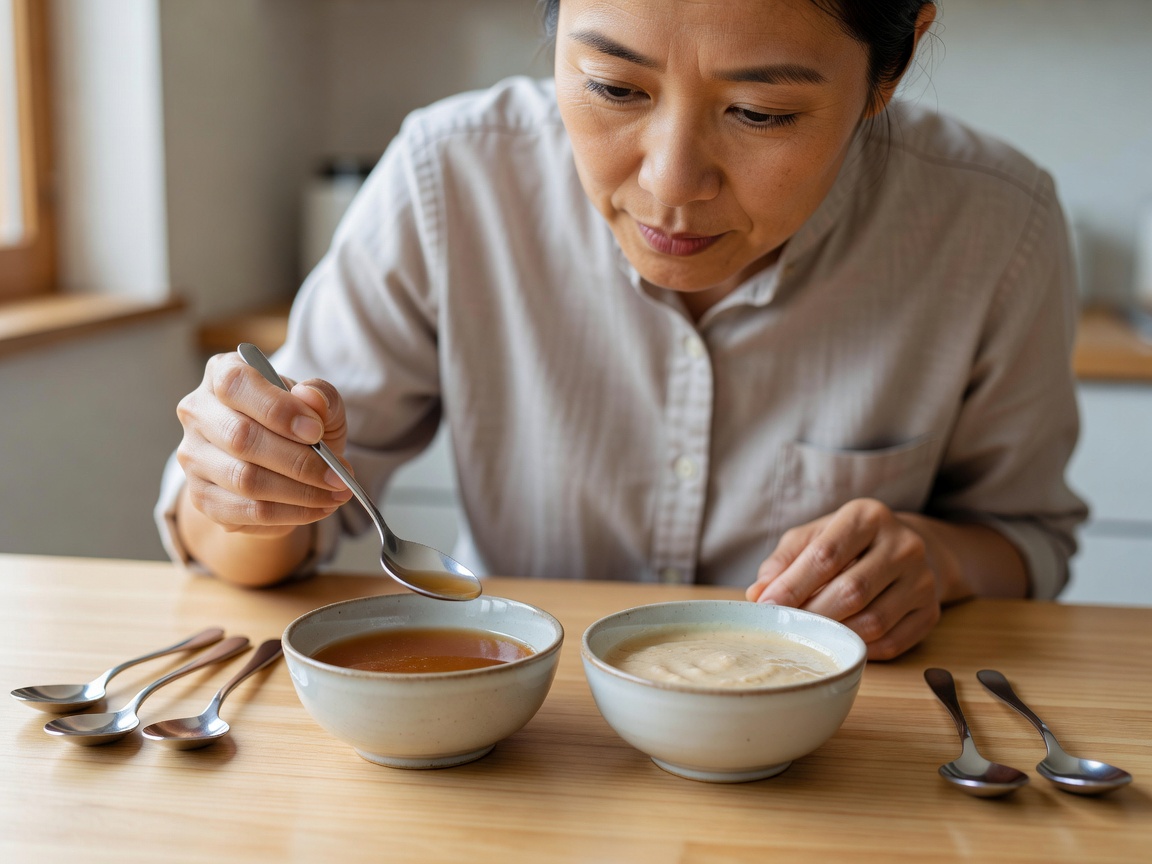
Name the job before the ingredients
Decide whether you need a concentrated seasoning for broth, a dressing for drained noodles or a finishing sauce for the pan. These have different dilution conditions. A concentrated ramen tare is not meant to be tasted as a complete soup, and a stir-fry sauce must account for liquid released by vegetables. Begin with a clear serving context rather than a universal “perfect ratio”.
Read labels carefully. Light soy sauce, dark soy sauce, tamari, fish sauce, miso and bottled noodle sauces differ in salt, sweetness and concentration. Product names do not guarantee equal strength across brands. Check allergens too: wheat, soy, sesame, fish, shellfish and peanuts may appear in seasonings or garnishes. Do not assume that a substitution is allergy-safe without checking its label and cross-contact information.
Build a small comparison
For a simple tasting exercise, mix 2 teaspoons of regular soy sauce, 2 teaspoons of water, 1 teaspoon of unseasoned rice vinegar and ¼ teaspoon of sugar. This is a learning sample, not a defining sauce for a named regional dish. Stir until the sugar dissolves. Keep half unchanged and use the other half for adjustments.
Taste a small amount on a cooked noodle. Ask a specific question: does salt overwhelm the finish, does acidity feel sharp, or does the sauce disappear when spread across the starch? Avoid judging only whether you “like it”. A description such as “salty at first, then no aroma” suggests a different adjustment from “pleasant flavour, but too thick to coat”.
Distinguish the major levers
Salt increases savoury impact but can become tiring. Acidity adds brightness and can cut through perceived richness. Sweetness can round a sharp edge, but it should not automatically be used to hide oversalting. Fat carries aroma and changes mouthfeel. Umami-rich ingredients add savoury depth, yet many also contribute substantial salt. Heat from chilli is another variable, not a substitute for the others.
If the sauce is too salty, increase its unsalted components or use less of it. Adding vinegar or sugar does not remove sodium. If it is too acidic, first consider dilution or blending with an unacidified portion. If it seems dull, test a few drops of acid in a separate sample before adding more salt. A flat sauce may also lack aroma, which a suitable fresh herb or small amount of aromatic oil can address.
Check texture separately from flavour
A thick sauce can taste concentrated simply because it deposits heavily on the first bite. Loosen it gradually and test how it coats the noodle. Sesame pastes may thicken when a little liquid is first added; continued gradual whisking with more liquid can smooth them out. Starchy cooking water can help some sauces cling, but it can also make an already thick sauce gummy.
Temperature matters. A dressing tasted cold may behave differently on warm noodles, and noodles continue absorbing moisture as they stand. Taste once immediately after mixing and again after a short rest. If a dish is intended to be served chilled, cool and store it safely, then make the final evaluation at its serving temperature.
Use a disciplined adjustment sequence
- Keep an unchanged reference portion and write down the starting measurements.
- Test sauce on the same amount of noodle each time.
- Change one variable in the adjustment portion, using a few drops or a small measured addition.
- Compare both samples, then repeat only if the difference moves towards your intended result.
Let regional examples teach relationships
Chinese sesame noodle preparations show how nutty richness, savoury seasoning and acidity can work together, though recipes vary by region and household. Sichuan dan dan noodles offer a different relationship among chilli oil, savoury toppings and seasoning; not every version includes sesame paste. Korean bibim guksu demonstrates a cold noodle context in which gochujang, acidity and sweetness must be evaluated against chilled noodles and vegetables.
Use these dishes as specific references, not as labels for any improvised sauce. Read a recipe from a knowledgeable source, note the intended noodle and serving temperature, then explain substitutions honestly. For further technique context, books such as Fuchsia Dunlop's Every Grain of Rice and J. Kenji López-Alt's The Wok offer useful paths for continued study; neither author is affiliated with this site.
Combine the skills
Choose one noodle dish and hold three variables steady while changing the fourth. Use the same noodles, cooking method and toppings, then compare two sauce concentrations. Your notes should explain what changed, not simply score the bowls.
Plan a combined practice